Ipinapakita ang mga post na may etiketa na SM Prime Holdings. Ipakita ang lahat ng mga post

Martes, Marso 18, 2025

SM Prime champions sustainability with Water for Tomorrow Campaign

Pico Sands Hotel has reduced water consumption by advocating towel and linen reuse, inviting guests to join its sustainability journey and conserve water.


Access to clean and potable water is one of today’s most pressing challenges, with rapid urbanization and population growth straining freshwater resources. United Nations (UN)-Water emphasizes that effective water management is crucial for society and the environment.

SM Prime Holdings, Inc. (SM Prime), a leading integrated property developer in Southeast Asia, has prioritized water conservation and management since the early 1990s—long before water stress and its link to climate change became widely recognized.

Through Water for Tomorrow, SM Prime’s water stewardship campaign, the company actively integrates climate resilience into its developments, ensuring responsible resource management while supporting the well-being of the communities it serves.


Sustainable water management

Water conservation measures and efficient management systems are embedded in SM Prime’s building operations. The company invests heavily in sustainable water management technologies to reduce freshwater use and the demand for municipal water supply. It has identified practical water usage and innovations to address the growing concern of water security. 

In 2023, SM Prime’s reported total water consumption amounted to 7.2 million cubic meters, with 61% of that consumed water being recycled. 

On average, more than 1 billion gallons of recycled water is used for mall operations. SM Supermalls uses recycled water for cleaning and sanitation, caring for its plants and landscaping, and cooling its air conditioning towers.  Efficient plumbing and innovative water-saving technologies with low-flow fixtures also regulate the mall’s water consumption. 

These practices have been scaled throughout the group. The SM Offices’ E-Com Centers in the Mall of Asia Complex have sewage treatment plants that recycle greywater. Aside from rainwater harvesting systems that help maintain its urban gardens, SM Development Corporation (SMDC)’s Sea and Shore Residences donate its discharged treated water to the greening of the Estates in the MOA Complex. 

As part of its water conservation program in Pico Sands Hotel, SM Hotels and Convention Corporation reduced its freshwater consumption by 36%, reaching 52% water reuse and 41% for Pico de Loro Beach and Country Club. Together with Hamilo Coast, SM Prime’s luxury and leisure estates in Nasugbu, Batangas, its water desalination plant has made significant impacts on water management and sustainable eco-tourism since 2010, ensuring that it services all developments that call Hamilo home. 


Protecting water resources 

SM Prime supports this year’s UN-Water World Water Day 2025 on March 22, which focuses on the theme “Glacier Preservation.” 

Halfway around the globe, glaciers play a critical role in the global water cycle.  Glacial ice is the largest reservoir of fresh water, holding about 69% of the world’s fresh water. With rapid glacial melting, altered rainfall patterns, droughts, and rising sea levels, the planet risks a water crisis that affects the most vulnerable.

Recognizing these challenges and the need for a reliable water supply, SM Prime continues to integrate water-efficient systems in its property developments. This helps create public awareness and encourages responsible water use among mallgoers, tenants, employees, and communities. In 2023, SM Supermalls’ SM City Baguio rainwater treatment facility (RTF) was launched to help reduce dependence on freshwater sources. It has treated 17,000 cubic meters of rainwater into potable water and continues to operate and serve its host community. 

“As businesses face growing water challenges, we must take action to secure our Water for Tomorrow. Water stewardship is an investment in our future. We must move beyond conservation and prioritize resource protection, waste reduction and water security for future generations.” ~Hans T. Sy, SM Prime Executive Committee Chairman

SM Prime’s Water for Tomorrow program plays a key role in SM Prime’s sustainability strategy, along with Net Zero by 2040 and a Waste-Free Future. 

Martes, Hunyo 14, 2022

Working together to serve more communities for a sustainable future

“I constantly encourage the private sector to work closely with the government. This way, we can be more cohesive in our efforts to make more meaningful progress towards a better and sustainable future. As a private enterprise, SM Prime will continue to do its share in addressing climate change for the benefit of communities. Climate change is looming over our Mother Earth. If we can contribute no matter how little and if I can get everybody to be aware of it, I think we will make an impact. It’s never too late.” ~Hans T. Sy, SM Prime Holdings Chairman of the Executive Committee
Solar rooftop at SM City North EDSA


Climate change is one of the most pressing and defining global issues today. It has become imperative for both the public and private sectors to continue to band together to primarily, safeguard the welfare of the people and to step up to strengthen the resilience of the nation.

The Philippines currently ranks third globally when it comes to climate change vulnerability. In relation to its geographical location, it is more exposed to altering intensities of climate change manifested through erratic weather systems and natural calamities.

The private sector is called upon now more than ever to align with the principles of sustainable development and to take on the same firm stance on environmentally sound practices in its operations. 

Mr. Hans T. Sy


Water Conservation 

Sustainability at SM Prime is at the core of its corporate identity. SM Prime has spearheaded sustainable practices as well as set records in pioneering programs to consciously protect the environment and strongly focus on resilience in its developments.

For one, the property conglomerate embarked on a campaign to substantially reduce its water consumption. It pioneered the installation of sewage treatment plants even before the measure was required by way of the Clean Water Act in 2004.

Today, its sewage treatment plants recycle 8.7 million cubic meters of water, lessening its dependence on fresh water sources for air conditioning operations, gardening, water closet flushing and other non-potable uses. SM Prime’s water catchment basins across 20 SM malls can also catch and store almost 79 million liters of water in total every time it rains, or as much as 32 Olympic-sized swimming pools. 

By controlling the flow of flood water, surrounding communities have been provided more protection against the devastating effects of floods, alleviating what communities would normally fear when the rains come.


Renewable Energy 

SM Prime continues to explore ways to promote environmental consciousness in its operations and developments to minimize environmental impact.
 
In 2014, SM Prime achieved an important milestone in the country with SM City North EDSA becoming then the world’s largest solar-powered mall. Today, SM Prime is adding eleven more malls with solar roof decks.

Showing its firm resolve to advance its sustainability agenda, the company is committed to increase the use of renewable energy by 50% in 2022 across its various business segments, ahead of the national goals to be 35% renewable by 2030.

Through these efforts, SM Prime is committed to provide affordable and clean energy to its tenant-partners, minimizing the carbon footprint emission in its operations.
Collaboration toward resilience

As a key figure in the private sector, Mr. Sy and his dedication to environmental protection continues to serve as a testament to how Philippine businesses can usher positive change toward disaster resilience and risk reduction management in the country.  

In 2012, Mr. Sy joined the United Nations Private Sector Advisory Group (PSAG) for Disaster Reduction. In 2015, he was also inducted as the first and only Filipino member UNDRR ARISE (Private Sector Alliance for Disaster Resilient Societies) International Board. He currently serves as co-chair in the ARISE-Philippines network and National Resilience Council (NRC) of the Philippines, representing the private sector. He continues to help develop multi-sectoral partnerships in the country to strengthen the ability of corporations, including MSMEs, to prepare and respond to disasters brought about by natural hazards such as earthquake. 

Miyerkules, Mayo 4, 2022

SM PRIME leads with Green Buildings for Sustainable Cityscapes

“Constructing greener buildings provides holistic solutions not only reducing emissions but also promoting social wellbeing. We see this in our developments which drives us to build greener and even retrofit our existing malls to meet green standards. Creating a more sustainable way of life requires a sustainable backdrop that supports the shift. At SM Prime, our passion is to create one that is sustainable and resilient for the life we want for today and the future.” ~Hans T. Sy, SM Prime Holdings Chairman of the Executive Committee

SM Aura Bicycle Racks


Cities continue to shape the way we live our lives – from shifting to greener lifestyles choices to reducing overall carbon emissions to help save the planet. The successful shift to greener cityscapes begin with the construction of green buildings, providing smart innovations that work with the environment and promote the well-being of the people who use these spaces on a daily basis. 

According to a study made by the US Green Building Council, green buildings can reduce carbon emissions by around 40% on average, water consumption by around 30% and waste generation by around 70%. Beyond the environmental benefits, green buildings also help meet social needs by enhancing spaces, protecting human health, empowering differently-abled members of the community to take active participation and ensuring access to basic services at reasonable rates. Economic benefits can be felt as well with green buildings commanding higher rent potentials, encouraging ‘greenovation’ and promoting cultural and recreational activities without harming the environment.

Committed to making every day living better, SM Prime has taken the lead in incorporating sustainability and resiliency in its designs, making each component work together as a fully-integrated city of the future. 

Among SM’s developments, a number boast of receiving LEED Gold certification while others are in the process of certification such as the SM Baguio expansion, SM North EDSA BPO offices, SM Megamall Mega Tower and SM Retail Corporation, to name a few.


SM Aura

The iconic SM Aura at the Bonifacio Global City is a mixed-use development that incorporates retail, trade halls and a Grade A office tower. The LEED Gold Certified mall promotes resource efficiency, green mobility and green landscapes.

SM Aura Bicycle Racks

  • Green Mobility. Cycling is encouraged with accessible bicycle storage, cyclists’ shower rooms and convenient access to safe lanes to public transit.

SM Aura Premier Park

  • Green Landscapes. The SM Aura Premier Park covers over 55% of the building, uses recycled water and provides enough room for plants to grow while protecting the building and people from heat.

SM Aura LEED GOLD Certification

  • Resource Efficiency. SM Aura uses 16% less than conventional buildings through a high- performance building envelope that reduces solar heat while allowing sufficient sunlight. Through low flow water sensor and metering faucets, it also reduces 1/3rd of its potable water use. Only low emitting materials were used as paint, adhesive sealants and floor materials.


Conrad Manila

Known as a lifestyle center, Conrad Manila is LEED Gold Certified. The hotel is designed with a dramatically-formed angular structure that houses a stylish 347-room hotel, spa and function space while S Maison  is home to a swathe of smaller, more bespoke outlets for brands.

Bicycle racks at the Conrad Manila


  • Luxury Means Green Mobility. Boasting of high-end luxury experience, Conrad Manila remains environmentally friend by providing preferred parking slots for low emitting fuel efficient vehicles, car-sharing vehicles and special parking spaces and facilities for cyclists.
  • Eco-Friendly Materials. Locally manufactured and recycled materials and products were used whenever possible with more than 80% of the project’s construction waste recycled. Filtration systems maintain a minimum efficiency rating of 90% to eliminate airborne particulates.

Conrad Manila LEED Gold Certification

  • Resource Efficiency. Conrad Manila is designed to reduce energy around 12% less than American energy standards. Its water heating system recovers heat from the chiller condensers to produce hot water while its ventilation system recovers the coolness from the exhaust air, returning that into the building. The hotel is outfitted with occupancy sensors, tinted with low emissivity insulated glass to keep heat and noise out,

Going beyond the LEED Certification, SM Engineering and Design Development, the mall's design and construction arm has implemented these sustainable design strategies on the following projects:

SM Baguio Sky Garden


SM Baguio brings outdoor and indoor as one space optimizing natural lighting and ventilation with the Sky Garden. It has a green roof system as well as a provision for an underground water reservoir for storage and reuse of rainwater with a capacity of 4,389 cubic meters. 

SM Seaside Cebu


  • SM Seaside Cebu mall goers can enjoy an extensive green area, center courtyard and roof garden. Constructed with low glass and utilizes EchoStop for noise management, the building is designed to maximize natural light and ventilation. 

SM Lanang Sky Garden

SM Lanang Premier showcases lush greens, a roof garden and green pavers that encourage filtration and allow stormwater back to the underground soil. It is equipped with a rain water catchment system and a water reservoir with a 546-cubic meter capacity based on 425mm per hour rainfall intensity. It also has a materials recovery facility which receives, segregates and prepares recyclable materials for marketing to end-user manufacturers. 


SM Masinag Holding Tank

SM City Masinag helps communities avoid flood waters through its 15,033 cubic meter water catchment facility. It is designed with green screens to promote vertical plant growth and is constructed with Clerestory windows as a source of natural light. 


SM North EDSA Solar Panels

SM North Edsa is one of the pioneers of the use of solar panels. It is also the first to have the Sky Garden and elevated parks. 


The Mall of Asia

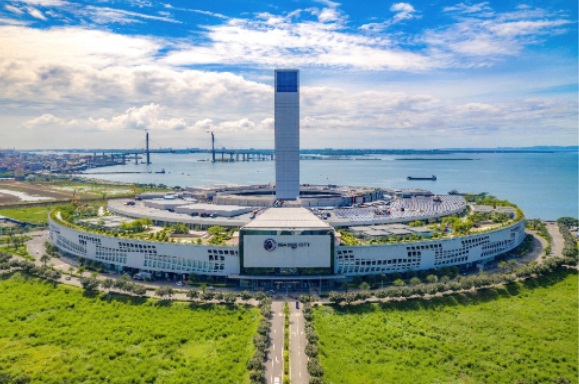
SM Mall of Asia is uniquely designed with a seawall to avert any damage from potential storm surges or seal level rise. Built on reclaimed land, it used an excavation method providing a greater degree of protection against liquefaction and seismic events. It is also elevated above the required building levels and is equipped with wave return and drainage channel to prevent flooding due to storm surges and high waves.


SM Marikina on stilts

SM Marikina sits on 246 stilts and is built 20 meters beyond the compliance for safety zone. At 20.5 meters above natural ground level, it serves as a first responder and a place of refuge for the residents of Marikina during times of calamities. 


Today, real estate investors, both for business and personal use, have grown to prefer spaces that support sustainability agendas of the growing population. Pursuing green building standards support the public’s aspiration for more sustainable communities that are designed for environmental and social well-being. SM Prime believes that it is important for developers to work with communities on addressing climate change and achieving shared aspirations – a greener, more sustainable cityscape for all to enjoy. 


Linggo, Abril 24, 2022

Preparedness during natural calamities by knowing what to do - and doing it.

“It is simply not a matter of if, but when. We already know that there will always be another typhoon, another earthquake, another natural calamity. Our best bet to avoid personal losses and damages is to be ready for when it comes. We often ask ourselves – how else can we make it better for the people? We don’t want to just simply build malls, but more importantly, we make sure that our developments improve the lives of the community by adding disaster-resilient features to help mitigate the potential effects of disasters.” ~Hans T. Sy, Chairman of the Executive Committee of SM Prime Holdings
Aftermath of Typhoon Odette, Lapu-Lapu City, Cebu, December 2021


Aftermath of Typhoon Odette, Lapu-Lapu City, Cebu, December 2021. Why disaster preparedness should be part of your plan. Prioritize your safety during natural calamities by knowing what to do - and doing it.

The Philippines has long been considered calamity-prone and vulnerable to disasters. In fact, it placed third among all the highest-risk countries worldwide, according to the World Risk Report of 2018.

A big contributor is the country’s geographical location and make-up. As an archipelago, the Philippines is composed of many small islands and is surrounded by water. It is also located within the Typhoon belt and the “Ring of Fire” and between the Eurasian and Pacific tectonic plates. Thus, natural occurrences such as typhoons, tsunamis, earthquakes and volcanic eruptions, are almost always a disaster waiting to happen - literally.

Just recently, the Visayas and Mindanao regions suffered from the devastating effects of Typhoon Odette. Taal Volcano’s last eruption was only in 2020, and it affected more than 736,000 people. Filipinos constantly experience a barrage of natural disasters, and yet, a study from the Harvard Humanitarian Initiative (HHI) in 2018 shows that 47.5% of all the respondents said they have not done anything to prepare themselves for a disaster within the past five years, and only 36% feel prepared enough.


November 2013. Tacloban, Philippines. Typhoon Haiyan, known as Super Typhoon Yolanda in the Philippines, was one of the most intense tropical cyclones on record.


Still, there seems to be hope in encouraging Filipinos to start prioritizing their safety and investing in disaster preparedness. In the same Harvard study,4 many of the respondents said if they had enough funds and resources, they would definitely be willing to prepare ahead. This shows that, in spite of it all, Filipinos do want to be ready.

So, what can we as individuals do to make sure that we are well-equipped when the next typhoon, earthquake, or volcanic eruption hits? The first step is to know your location well. Is it prone to flooding? How far away is it from the nearest volcano? Is it close to a fault line? All this information can be found with just a click of a button, thanks to digitalized documentation efforts led by the Philippine Institute of Volcanology and Seismology (PHIVOLCS) and the Department of Science and Technology (DOST). (Link: https://www.phivolcs.dost.gov.ph/index.php/gisweb-hazard-maps) 

Once you have assessed your location’s vulnerabilities, now you can actively prepare yourself and your home for any incoming calamities. Check your house for any damages, and if it is made from materials that can withstand ground movement or strong winds. Keep a Go Bag with emergency resources accessible, both in your homes and places of work. 


SM Lanang Premier in Davao has a rain water catchment tank with a capacity of 600 cubic meters.


Finally, make it a habit to listen to the radio and the news for any updates, and monitor your local government unit’s social media for any announcements. Familiarize yourself with as many routes as you can to your nearest evacuation center. Schools, barangay courts, and even malls like SM Supermalls often open their doors to receive evacuees in times of crisis.


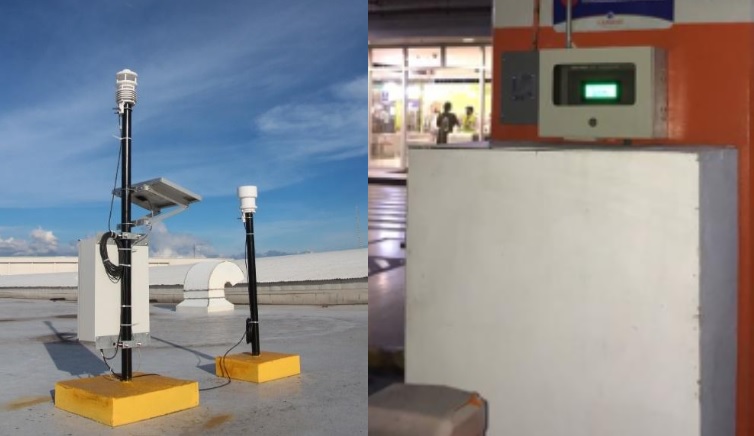
SM DRR Facilities: (Left) Automated Weather Stations: SM Prime Holdings, Inc. has inked a partnership with the Manila Observatory for the “High Definition Clean Energy, Climate, and Weather Forecasts for the Philippines” Project, a data-driven system that utilizes automated weather stations (AWS) and high-performance computer modeling to provide clean energy and weather forecasts up to five days in advance. (Right) SM has also installed


Earthquake Recording Instrumentations (ERI) on all malls for earth movement real time monitoring being recorded in an ERI dashboard.

SM, as a responsible member of the community, has taken disaster resilience as a necessary investment to help ensure that our communities thrive. SM allots 10% of its capital expenditures to incorporate disaster-resilient features, of which installing water management design features is one of them. By ensuring that its investments, employees, tenants and partners are resilient, no Filipino will be left behind.

“It is simply not a matter of if, but when. We already know that there will always be another typhoon, another earthquake, another natural calamity. Our best bet to avoid personal losses and damages is to be ready for when it comes.” ~Hans T. Sy, Chairman of the Executive Committee of SM Prime Holdings

SM Marikina stands tall above a 23-meter Marikina River water lever rise because it sits on 246 stilts and an additional 20 meters farther than the suggested 90-meter distance from the Marikina River centerline.


Some of SM’s notable resilient infrastructure is SM City Marikina and SM Mall of Asia, designed to help mitigate the effect of flooding in the community. Most SM malls feature disaster-resilient designs including SM City Puerto Princesa in Palawan wherein the mall es elevated approximately 1.40 meters from the City Road, thus preventing it to be flooded from the heavy rain throughout the year. SM City Consolacion in Cebu has an adequately designed draining system discharging to adjacent creek and area surface drain along the perimeter walls. 


SM Seaside City Cebu


SM Seaside City Cebu's protection against storm surges is provided by elevating the site above mean sea level, thereby allowing the mall to be a place of refuge during times of flooding. The complex road was constructed 4.0m (not 3.0m) higher than the city road. Instead of flood barrier walls as a solution to the threat of flooding, the building's main floor was also elevated at 4.0m (not 4.5m) from the complex roads. The first level was designed to be a parking area with a 4.0m elevation difference from the main floor.

For more information on SM Prime Holdings and its other programs towards disaster preparedness, visit their website at www.smprime.com.


ABOUT SM PRIME HOLDINGS
SM Prime, one of the leading integrated property developers in Southeast Asia, remains committed to its role as a catalyst for economic growth, delivering innovative and sustainable lifestyle cities, thereby enriching the quality of life of millions of people. Sustainability and Disaster Risk Reduction and Resilience form part of SM Prime’s core business strategies. It ensures that its risk-informed investments catalyze sustainable development and positive change in the communities where it operates.